
Health Insurance 101
Everything you need to know before your call with usGet a Quote
What is Health Insurance?
It isn't just a "medical bill payer." It is the barrier between a health crisis and financial ruin. It ensures that when your health is at its most fragile, your bank account doesn't have to be. It does one thing and does it well: it buys you the best possible care without forcing you to choose between your recovery and your life savings.
It isn't just a "medical bill payer." It is the barrier between a health crisis and financial ruin. It ensures that when your health is at its most fragile, your bank account doesn't have to be. It does one thing and does it well: it buys you the best possible care without forcing you to choose between your recovery and your life savings.
Why does it make sense, whatever your situation?
Our Philosophy — What to Look For in Your Policy
Health Insurance Feature
Feature | What It Means for You | Importance |
Room Rent Limit | Determines which hospital room you can access. Exceeding your limit means paying a large share of the total bill — go for no limit. | Very Important |
ICU Charges | Covers ICU costs during treatment. Ensure this is fully covered for serious conditions. | Very Important |
Disease-wise Sublimits | Caps payout for specific illnesses (cataract, hernia). If the limit is low, you pay the rest. | Very Important |
Co-payment Clause | You share a % of every claim (e.g., 20% co-pay on ₹2L bill = ₹40K out-of-pocket). Avoid if possible. | Very Important |
Restoration Benefit | Refills your cover after it's fully or partially used within the same policy year. | Very Important |
Consumables Cover | Covers items like gloves, PPE kits, syringes, etc. — usually offered as an add-on. If you skip it, these costs can quietly add 5%–15% to your hospital bill. | Very Important |
Modern Treatments | Covers robotic surgery, laser treatments — increasingly common and expensive. Check for any exclusions in your policy. | Very Important |
Daycare Treatment | Covers procedures not needing 24-hr stay (cataract, chemotherapy). | Very Important |
Pre-Hospitalisation | Covers doctor visits, tests, scans before admission. Look for 60–90 days coverage. | Very Important |
Post-Hospitalisation | Covers follow-up costs after discharge — medicines, tests. Longer is better. | Very Important |
Cashless Hospitals | For treatments at a network hospital, the insurer pays the bill directly — saving you out-of-pocket expenses. | Very Important |
PED Waiting Period | Pre-existing conditions (e.g., diabetes, thyroid) covered after 3+ years. Choose a shorter waiting period plan if needed. | Very Important |
Initial Waiting Period | First 30 days: most claims disallowed (accidents exempt). Don't buy insurance expecting immediate use. | Mandatory |
Specific Waiting Period | Slow-growing illnesses like arthritis/stones covered only after 2 years. Know this before buying to avoid claim surprises. | Mandatory |
Cumulative Bonus | Coverage grows for every claim-free year (e.g., ₹10L → ₹12L). Good way to increase cover over time. | Good to Have |
Annual Health Checkup | Free yearly tests (blood tests, basic screening) at no extra cost. | Good to Have |
AYUSH Treatment | Covers Ayurveda, Homeopathy etc. Useful if you prefer these; otherwise not essential. | Good to Have |
OPD Cover | Covers doctor visits/medicines without hospitalization. Sounds useful but often costs more than the benefit. | Optional |
Maternity Cover | Covers delivery and newborn expenses, but usually has a 2–4 year waiting period. Plan well in advance. | Optional |
Deductible Option | You pay a fixed first amount (e.g., ₹50K); insurance pays after. Lowers premium — only if you can afford the initial cost. | Important (Cost-saving) |
Claim Settlement Ratio | % of claims approved by the insurer. Higher is better, but also check the quality of the claim process. | Indicates Reliability |
Complaints Ratio | How many customers have complained. Lower ratio = smoother claim experience. | Lower is Better |
Your Holistic Protection Layer
For emergencies & hospitalisations | Covers room rent, ICU, surgery, medicines, diagnostics and ambulance during hospitalization. | Health Insurance |
For your family's financial security | Pays a lump sum to your family upon death. Protects their financial future even in your absence. | Term Insurance |
To replace income during a major health event | Fixed lump sum on diagnosis of cancer, heart attack, stroke and other listed critical illnesses. | Critical Illness |
For accidents that cause disability | Covers death, permanent disability or income loss due to accidents. Often missed but critical. | Personal Accident |
For health cover during international travel | Covers medical emergencies, hospitalization, and evacuation while travelling abroad. | Travel Insurance |
Plans
Related Blogs

What Is IRDAI? What Does IRDAI Do for Insurance in India?
October 7, 2026 | Jaison F Joy
Read MoreMaking Health Insurance Affordable: Is EMI Really the Best Way?
February 4, 2026 | OneAssure Team
Read MoreInsurance in 2026: Great for Your Wallet, But What’s Still Missing?
February 1, 2026 | OneAssure Team
Read MoreHow India’s Budget 2026 Could Shape the Future of Insurance - A Young Earner’s Guide.
February 1, 2026 | OneAssure Team
Read More.png)
Tips To Choose The Best Health Insurance Plan
November 17, 2025 | Mahak Chauhan
Read More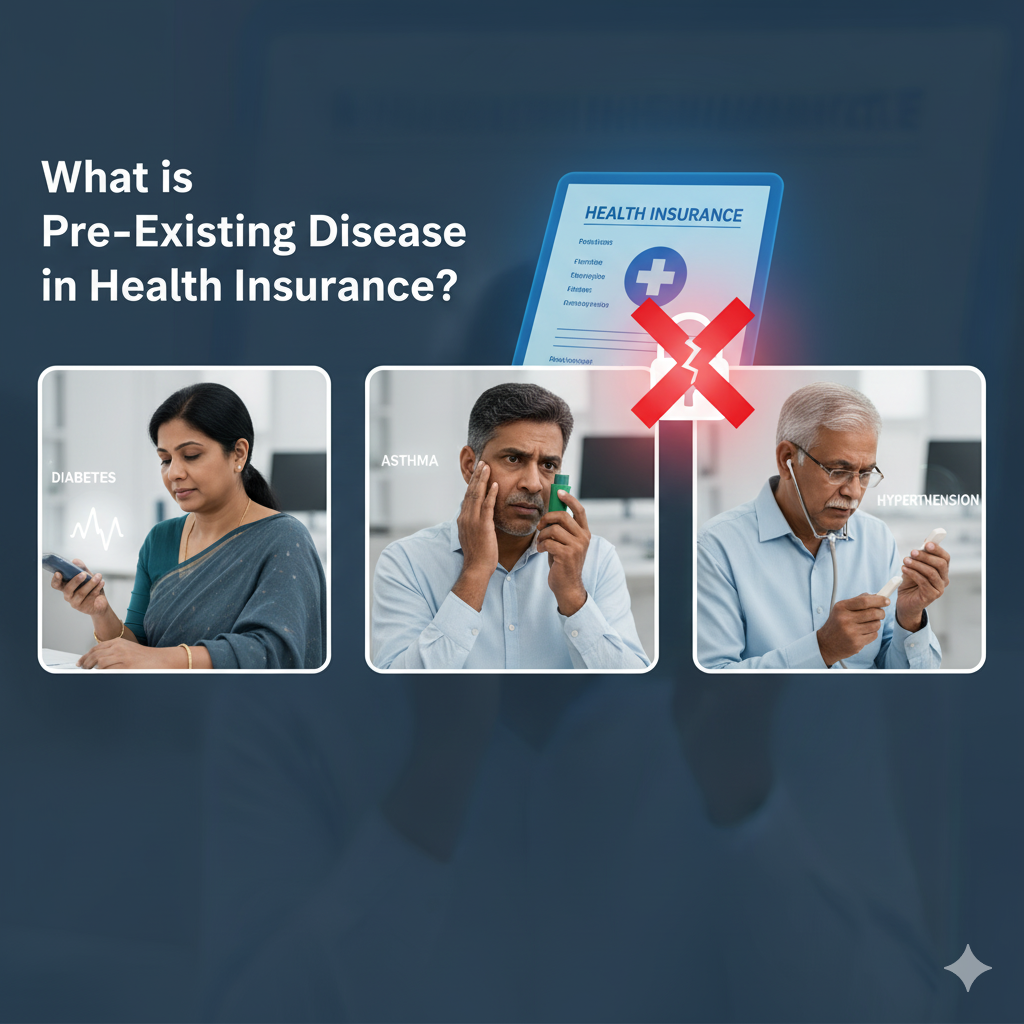
Pre-Existing Disease in Health Insurance: All You Need to Know Before Buying
November 17, 2025 | Mahak Chauhan
Read More
Family Floater Plans: A Quick Overview
November 16, 2025 | Mahak Chauhan
Read More
Chat with PolicyPal
Get a free policy review
No pressure. No product push. Just honest advice.